
Jim Detjen
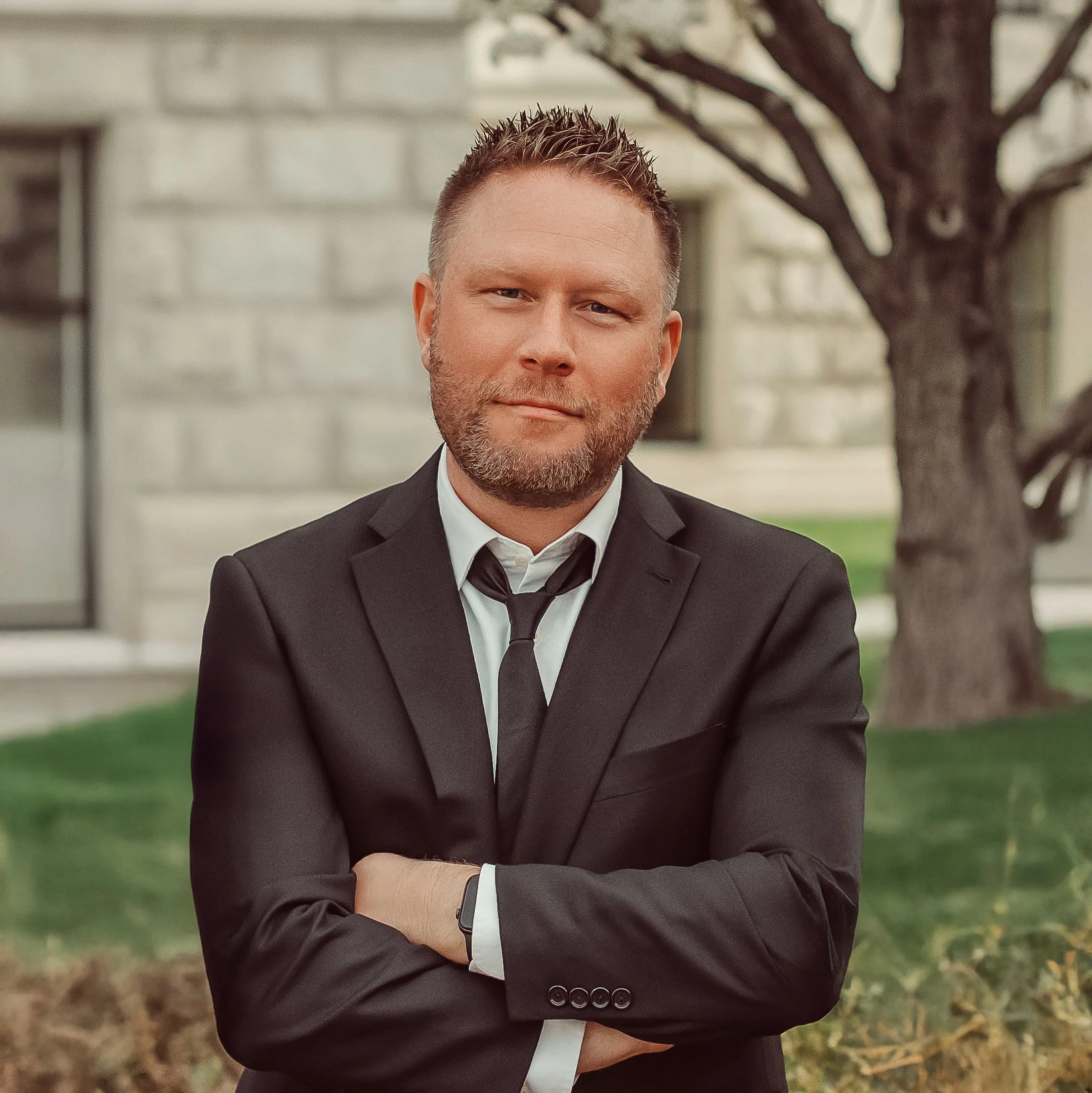
Jim Detjen founded The M Institute, an institution dedicated to strengthening human discernment through publishing, public inquiry, research, intellectual property, and Fellowship.
Across three decades, his work has spanned military service, education, publishing, nonprofit leadership, organizational strategy, and advisory work with founders, educational institutions, leadership teams, and more than 200 organizations.
His work includes Distorted, the Clarity Framework™, Signal Check™, the Library of Discernment, and Think First, the Institute’s flagship public inquiry podcast.
His work increasingly centers on one enduring question:
How do individuals and institutions exercise sound judgment in an age increasingly shaped by artificial intelligence, persuasive technology, and accelerating information?
-
Jim Detjen grew up in Seattle during the 1970s in a working-class family shaped by military service and the opportunities created through the GI Bill. Long before the internet reshaped attention and algorithms influenced daily life, he developed an early fascination with people, leadership, and the institutions that shape society.
Over the course of the next three decades, his work carried him through military service, education, nonprofit leadership, publishing, organizational strategy, and advisory work with founders, educational institutions, and more than 200 organizations. Each environment presented different challenges, but one observation remained remarkably consistent.
People rarely respond directly to reality. They respond to their perception of it.
That observation became increasingly personal while raising three children during one of the most significant technological transitions in human history.
Watching them grow into adulthood during an era shaped by smartphones, social media, algorithmic information, artificial intelligence, and unprecedented technological acceleration raised a deeper question: What human capacity will matter most in the decades ahead?
Years spent working with organizations helped frame that question.
Years spent reading the great works of civilization convinced him that every generation inherits new tools, but every generation must still learn how to use them wisely.
Years spent raising a family made it unavoidable.
The answer, Jim gradually came to believe, was not simply intelligence, nor information, nor education alone.
It was the capacity to perceive reality carefully, exercise sound judgment, and continually recalibrate one’s understanding as new evidence emerged.
That realization changed the trajectory of his work.
-
The realization that ultimately became The M Institute did not arrive quickly.
It emerged gradually through years of studying history, philosophy, psychology, leadership, science, technology, and the enduring questions that have shaped civilizations across generations.
One observation continued to surface.
Throughout history, societies have risen and fallen not only because of the information available to them, but because of their capacity to interpret reality wisely.
Modern technology has transformed the scale, speed, and accessibility of information.
It has not changed the human responsibility to judge it well.
As artificial intelligence accelerated and increasingly sophisticated systems began shaping what people saw, believed, and trusted, that responsibility became even more significant.
Writing Distorted brought many of these ideas together.
The book explored perception, manipulation, gaslighting, and what Jim came to describe as poetic truth. Yet completing the manuscript clarified something unexpected.
The book was never the destination.
It was the beginning.
The deeper question was never simply how to help people know more.
It was how to help people judge better.
That realization transformed a writing project into an institution.
The M Institute emerged from the conviction that humanity’s future will depend not merely on the information it possesses, but on the discernment with which it uses it.
-
The M Institute was not shaped by a single profession.
It was shaped by decades spent working across very different institutions.
Military service, education, nonprofit leadership, publishing, organizational strategy, and advisory work each offered a different perspective on how people, organizations, and societies make decisions under conditions of uncertainty.
From educational institutions and nonprofit organizations to founders, executive teams, and public-facing brands, each environment revealed different expressions of the same underlying challenge.
Despite their differences, one lesson remained remarkably consistent.
Knowledge alone was never enough. Neither was intelligence.
The ability to interpret reality carefully—and to revise one’s understanding when reality demanded it—proved to be the more fundamental capacity.
Over time, those experiences revealed that discernment is not simply an individual virtue.
It is an institutional one.
Healthy organizations depend upon it.
Healthy societies depend upon it.
Those experiences did not create The M Institute.
They prepared its founder to recognize why it had become necessary.
-
The M Institute is intentionally designed to outlast its founder.
Its Charter, Fellowship, publications, research, intellectual property, and institutional architecture exist to preserve its mission across generations rather than around any single individual.
The Founder serves as the Institute’s first steward—not its permanent center.
If the Institute fulfills its purpose, future generations will question it, refine it, strengthen it, and ultimately carry it farther than its founder ever could.
That has always been the objective.
Institutions endure not because they resist change, but because they preserve what is essential while remaining humble enough to learn.
Today, Jim continues to write, research, and develop the work of The M Institute from the mountains of Utah, where many of the Institute’s ideas continue to be refined through study, writing, and conversation.
The measure of The M Institute will never be the prominence of its founder.
It will be the quality of the discernment it leaves behind.
-
Long before The M Institute became an institution, its founding principles were first lived at home.
Jim and his wife have spent nearly three decades raising three children during one of the most significant technological and cultural transitions in modern history.
Their family’s journey has been closely intertwined with both Harvard University and the United States Air Force Academy, where scholarship, military service, leadership, and disciplined inquiry continue to intersect across generations.
For Jim, discernment has never been merely an intellectual pursuit.
It has first been a daily practice—tested through marriage, parenthood, and the responsibilities of family life.
The first institution Jim sought to build well was not The M Institute.
It was his family.
-
Service
Military service in the United States Army, followed by decades of leadership across education, nonprofit organizations, publishing, and organizational strategy.Leadership
Executive leadership spanning education, athletics, organizational development, strategic advisory, and more than two hundred organizations navigating growth, change, and public trust.Publishing & Public Inquiry
Author of Distorted. Creator and host of Think First. Founder of The M Institute and its complementary publishing, research, and public inquiry initiatives.Institutional Development
Creator of One Point Six Research, the Clarity Framework™, Signal Check™, and the Library of Discernment—an integrated body of work developed to strengthen human discernment across publishing, research, education, and institutional life.
Continue the Inquiry
The Founder page explains how The M Institute began. The Institute’s continuing work is expressed through its Charter, Fields of Inquiry, publications, research, and Fellowship.